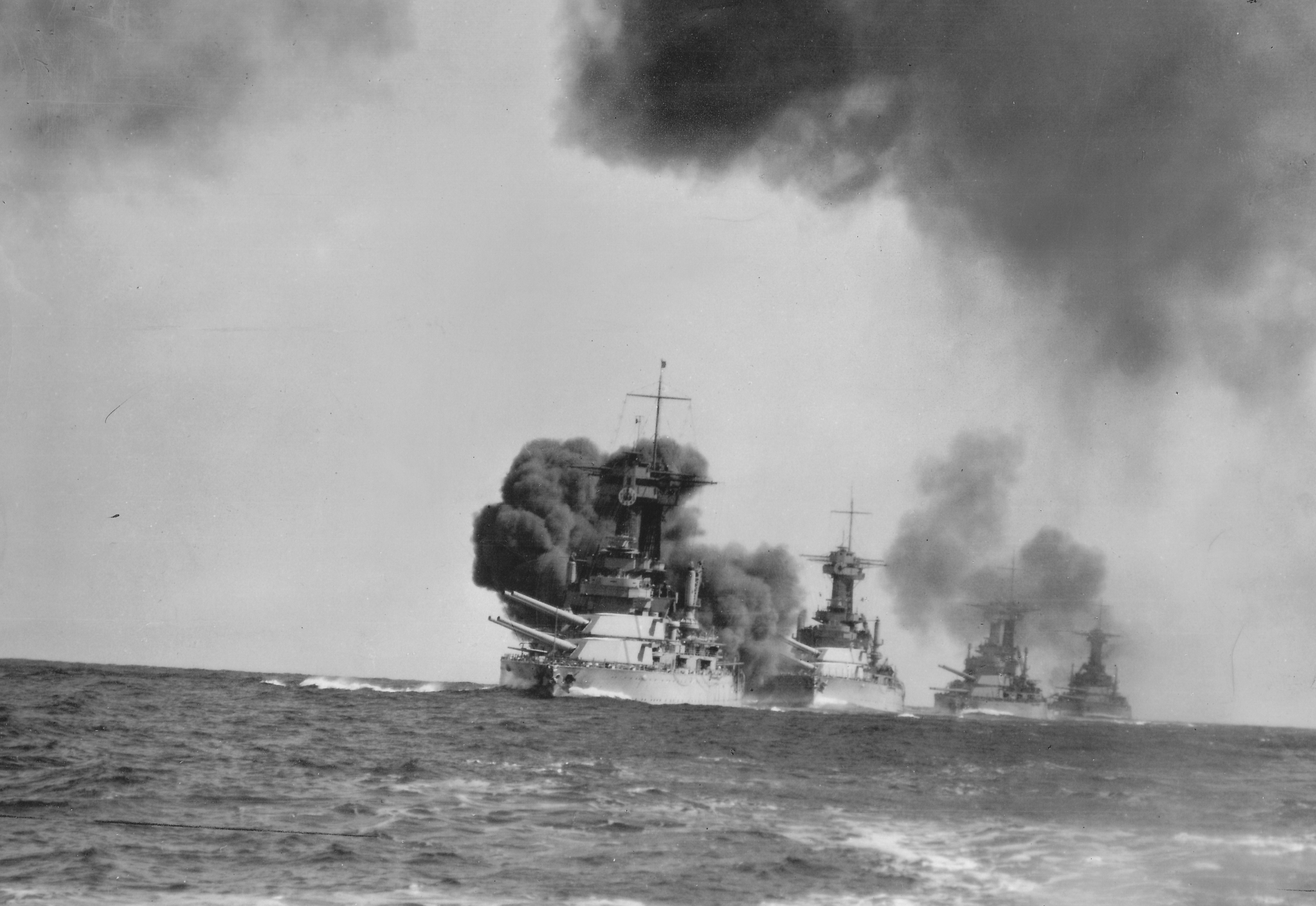

Before the twentieth century ships when relied upon visual signaling, vessels beyond range of sight or a cannon shot were blind, deaf, and dumb in the dark, making night battles at sea rare, and near always accidental. The introduction of certain technologies like the torpedo, the searchlight, radio and then radar, transformed naval warfare by making night combat feasible and, in some cases, desirable. The process by which navies integrated these new tools of war and turned the dark into a medium for effective combat, however, was long and difficult.
Fighting in the Dark tells the story of surface naval combat at night from the Russo-Japanese War through World War II. The book is about the process of confronting and mastering problems brought on by technological change during war. It does this by examining seven periods focusing on the Imperial Russian Navy in 1904–1905, the Imperial German Navy from 1914–1918, the Royal Navy from 1916–1939, the Regia Marina from 1940–1943, the Imperial Japanese Navy in 1942, the U.S. Navy in 1943–1944, and the Royal Navy and Royal Canadian Navy from 1943–1944. The chapters are written by authors hailing from Australia, Canada, Italy, and the United States, all recognized masters in their subject.
Reviews and Recognitions
“This is an excellent book by seasoned authors, with analyses and conclusions expertly presented in a readable and well-presented format. Whilst the modern context might be different, the learning points remain pertinent; the book should be a compulsory read for Warfare Officers!” – Rear Admiral R. G. Melly, The Naval Review
“O’Hara and Hone’s approach comparing the night fighting developments of multiple navies is a template worth replicating. Building on the discussion by Goldrick, Parshall, and Hone of the interwar fleet maneuvers/problems conducted by the British, Japanese, and Americans, a synthetic work going into greater detail about how the major navies prepared for war during the interwar period would be a worthy project. Whoever takes it on will certainly want to have Fighting in the Dark close by.” – David F. Winkler
“For those interested in naval history, Fighting in the Dark is a gem. It is readable, giving readers insight and understanding of the issues involved in night actions.” – Mark Lardas, The Nautical Research Guild
“Fighting in the Dark featuring a brilliantly told narrative of the night actions and how night fighting doctrine evolved. While the study ends in 1945, before the modern era of satellites, missiles, combat data systems and the emerging unmanned platforms, the fundamental need for innovative thinking, rapid decision-making and highly trained personnel is just as relevant today as it was during the naval night fighting era.” – Tim Coyle, Australian Naval Institute
“A superb study by first rate scholars of the first 40 years of naval night tactical development during a period of great technological change. The early chapters are particularly welcome since they provide a wealth of new and previously little studied scholarship on naval night tactics in the early 20th Century.” — John T. Kuehn, Ph.D., Professor of Military History. U.S. Army Command and General Staff College, Former FADM E.J. King Professor, Naval War College
“Half of every war is fought at night. Fighting in the Dark shows how the Canadian, German, Royal, Italian, Imperial Japanese, Imperial Russian and United States Navies learned–or failed to learn–during 20th century nighttime sea battles. Doing so meant mastering the environment and managing changes to ships, technology, tactics and leadership, all while fighting peer competitors of comparable skill. Deftly explaining what navies needed to win, serving naval officers and civilian students alike will find this milestone book well-researched, lucid, informative and exciting.” — Sarandis Papadopoulos, PhD., historian and co-author of Pentagon 9/11
“This is an intriguing and detailed anthology by a dedicated team of historians, that explores a rarely studied area of naval warfare. In an age of purportedly revolutionary technological developments, the reader will discover that not every innovation is tied to a wondrous new gizmo or weapon system. Sometimes surprise comes from an enemy prepared to exploit an unfamiliar context like the chaos of fighting in the dark. The chapter authors offer “deep dives” and true insights that cover the last century. These are carefully curated into a unique story about how the “fog of war” can be turned into a weapon.” — Frank Hoffman, Ph.D., author of Mars Adapting, Military Change During Wartime, National Defense University.
“Each chapter of Fighting in the Dark is introduced with a memorable anecdote, and many are followed by a “lessons learned” section. An excellent conclusion wraps up this highly readable and cogently argued book, and a useful appendix adds to its value, as do the extensive notes. While some of the issues addressed here are well known some deal with less familiar navies and the national and structural imperatives that drove them. To be sure, each author has his own style, and some concentrate more than others on describing actual battles. But they all cover important ground and together they give an unmatched picture of why and how night naval actions developed during the first half of the Twentieth Century.” – Kathleen Broome Williams, StrategyPage

